

Introduction
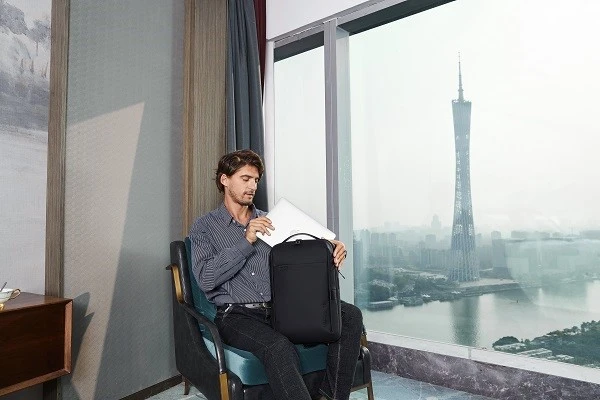
As laptops become part of everyday work, study, and travel routines, backpacks have evolved to accommodate different carrying habits and functional requirements. Laptop backpacks and business backpacks are two common categories, both designed to carry electronic devices and daily essentials but with different design priorities. Understanding how they differ in storage arrangements, appearance, construction, and intended use helps explain their respective positions in the backpack market. For wholesalers and retailers, these distinctions also provide a useful reference when evaluating product ranges and customer demand.
What Defines a Laptop Backpack and a Business Backpack?
The main distinction between these two categories lies in their primary functions and the way their designs accommodate everyday belongings.
Laptop Backpacks
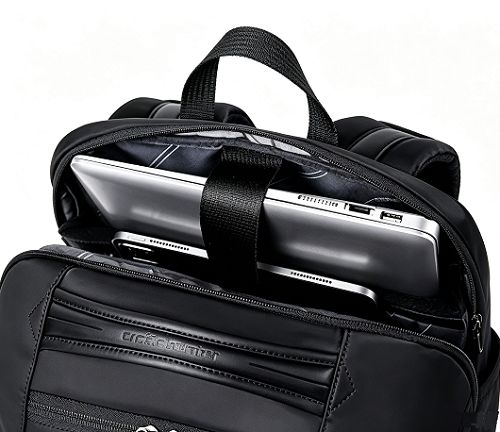
Laptop backpacks are primarily designed to protect and carry portable computers during daily activities. They typically feature padded laptop compartments and additional pockets for tablets, chargers, documents, and personal items. The degree of protection depends on the compartment's padding, structure, and dimensions. Some models also include trolley sleeves or expandable sections, while their overall appearance ranges from casual everyday styles to more professional designs.
Business Backpacks
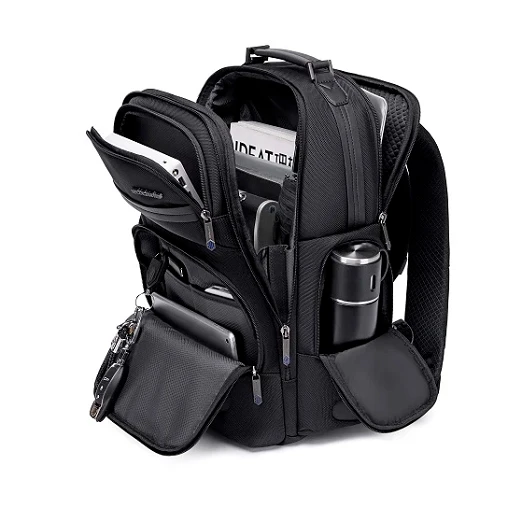
Business backpacks are designed around the storage and organization needs of office professionals and business travelers. In addition to padded laptop compartments, they often provide dedicated space for documents, notebooks, chargers, and other work essentials. Their designs generally feature cleaner silhouettes and more structured layouts, while ergonomic shoulder straps, breathable back panels, and luggage straps on selected models support regular commuting and business travel.
Laptop Backpack vs Business Backpack: What Are the Key Differences?
Their differences can be examined through several aspects of product design, functionality, and intended use.
|
Comparison Dimension |
Laptop Backpack |
Business Backpack |
Stocking Consideration |
|
Primary Design Focus |
Laptop protection and versatile everyday storage. |
Professional styling and organized work storage. |
Consider whether customers prioritize general daily use or work-related functions. |
|
Appearance and Styling |
Ranges from casual designs to functional commuter styles. |
Generally features cleaner silhouettes and more restrained styling. |
Consider the visual preferences of different customer groups. |
|
Laptop Compatibility |
Available in different sizes for specific laptop dimensions. |
Commonly accommodates 13-inch, 14-inch, or 15.6-inch laptops, depending on the model. |
Verify actual compartment dimensions rather than relying only on screen-size labels. |
|
Internal Storage Layout |
Organizes laptops, tablets, chargers, and daily belongings. |
Places greater emphasis on documents, office accessories, and work essentials. |
Compare compartment size, access, and layout to identify functional differences. |
|
Capacity and Configuration |
Includes casual, compact, and expandable designs. |
Offers slim, multi-compartment, and expandable options. |
Compare usable capacity and internal layouts across different models. |
|
Travel Convenience |
Selected models feature trolley sleeves and multi-purpose storage. |
Selected models include luggage straps and business travel features. |
Check individual model configurations, as travel features can overlap. |
|
Carrying Comfort |
Often includes padded shoulder straps and breathable back panels. |
Combines ergonomic straps and back support for commuting and travel. |
Compare padding, back-panel structure, and product weight. |
|
Materials and Durability |
Uses polyester or nylon, with water-resistant finishes on selected models. |
Also uses durable materials, with construction varying by model. |
Evaluate fabric, zippers, stitching, and hardware before bulk purchasing. |
|
Target Customers and Sales Channels |
Serves students, commuters, travelers, and general laptop users. |
More closely targets office professionals, executives, and business travelers. |
Align product selection with customer profiles and sales channels. |
Which Product Features Matter Most When Stocking These Backpacks?
Beyond their general positioning, several construction and functional details determine how these backpacks perform in everyday use.
Laptop Compartment Dimensions and Protection
The laptop compartment should match the physical dimensions of the devices it is designed to carry. Padding thickness, compartment structure, and separation from the main storage area all affect device protection. Screen-size labels alone may not guarantee compatibility, as laptop dimensions vary between models. Buyers should also consider whether the compartment can accommodate devices with protective cases.
Storage Capacity and Compartment Layout
Storage capacity depends not only on the backpack's overall volume but also on how its internal space is divided. The main compartment should accommodate larger belongings, while accessory pockets provide separate storage for chargers, tablets, documents, and personal items. Pocket quantity alone does not determine storage efficiency; dimensions, placement, and accessibility are equally important.
Fabric, Zippers, and Construction Quality
Polyester and nylon are commonly used in both categories, with their weight, texture, and wear characteristics varying according to fabric specifications. Water-resistant finishes can help protect belongings from light rain and splashes, although they do not necessarily make a backpack waterproof. Zippers, reinforced stitching, and hardware also influence durability, particularly at frequently used openings and load-bearing points.
Carrying Comfort and Travel Features
Carrying comfort is influenced by shoulder strap padding, strap width, back-panel structure, and how the backpack distributes weight. These factors become more noticeable when users carry laptops and other heavy belongings for extended periods. Trolley sleeves, luggage straps, and expandable compartments provide additional travel convenience, but their usefulness depends on how frequently the backpack is used for commuting or business trips.
How Should Buyers Decide What to Stock?
A practical stocking strategy should reflect customer demand, product specifications, and the role each backpack plays in the overall assortment.
- Identify Target Customers and Sales Channels: Determine whether your customers are students, office professionals, commuters, or frequent travelers. Different groups may prioritize device protection, professional styling, storage organization, or travel convenience.
- Establish Laptop Size Coverage: Select models according to the laptop sizes commonly used by target customers. Verify actual internal dimensions, particularly when stocking backpacks for 14-inch, 15.6-inch, or larger devices.
- Build a Balanced Range of Styles: Include versatile everyday laptop backpacks and professional business designs. Casual, minimalist, slim, and expandable models can address different preferences without creating an overly repetitive assortment.
- Match Functional Configurations with Usage Needs: Consider how customers use their backpacks when comparing features. Commuters may value laptop protection and accessory storage, while business travelers may prioritize document organization, luggage straps, and additional capacity.
- Manage SKU Overlap and Inventory Efficiency: Compare models by capacity, compartment layout, materials, and travel features. Avoid stocking products with nearly identical configurations, and adjust quantities based on sales performance and customer feedback.
Conclusion
Laptop backpacks generally emphasize device protection and versatile everyday storage, while business backpacks place greater emphasis on professional styling and work organization. Their differences are reflected in compartment arrangements, functional configurations, and intended user groups, making these factors useful when evaluating the two categories. Arctic Hunter, established in 2009, is a bag manufacturer with 15 self-owned factories and a 40,000 m² production base. Our manufacturing capabilities and OEM/ODM services provide further information about our production operations and customization services. Contact us to learn more about our laptop and business backpack product range.