

A finished-product photo can show what a backpack looks like, but it cannot tell you everything about its quality. How smoothly the zipper opens, how the handle feels in your hand, how easily the shoulder straps adjust, and how well the bag holds its shape when packed all begin with decisions made during design and development.
At ARCTIC HUNTER, developing a new product is not simply a matter of sending a completed drawing to the workshop. The head designer chooses materials, components, and branding details; the sample team revises structure and proportions; and production carries those details through to the finished bag.
The process moves from design and sampling through material selection, component development, cutting, sewing, inspection, and packing. It requires materials, components, and manufacturing stages to work together.
Design starts with use
Backpack design begins with two questions: who will use the bag, and how will they use it?
For business commuting, access and organization matter. For everyday outings, proportions and carrying options also shape the design. These needs influence opening positions, compartment layouts, shoulder straps, and overall appearance. A change to the silhouette can also affect internal space or the way a bag is manufactured.
The design team considers both the overall shape and the parts people touch repeatedly: how a zipper pull is gripped, how a handle connects to the bag, and whether the webbing and hardware suit the collection. Drawings turn these decisions into proposals that can be discussed, sampled, and refined.
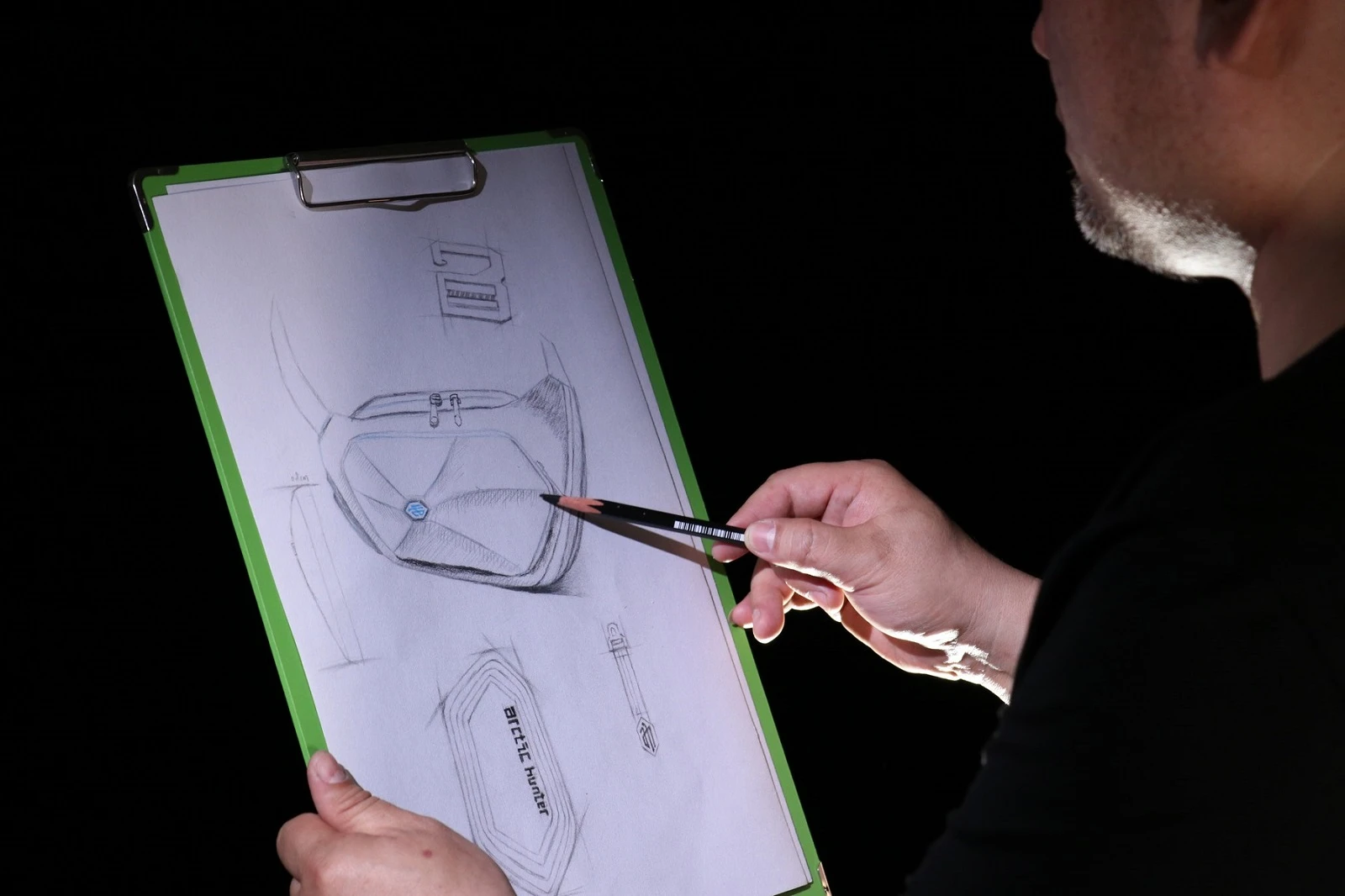
A design sketch showing the development of a bag's shape and details. The example depicts a crossbody bag, not the specific backpack shown elsewhere in this article.
Sampling is iterative
A first sample does not mean development is finished. Before a new ARCTIC HUNTER product is presented to consumers, it goes through at least ten rounds of refinement and adjustment. Development starts with the overall impression of the first version, then moves into improvements to individual sections. Consumer feedback data informs adjustments to dimensions, appearance, and details.
Each round addresses specific questions: are the proportions right, do the components work together, and how should feedback be translated into changes? A dimension change means more than updating a number; the team must reconsider the bag's visual proportions. An appearance change must still account for everyday access and carrying. After a revision, the design is reviewed as a whole so that an improvement in one area does not create a problem elsewhere. The aim is to resolve identifiable issues before the product reaches consumers.
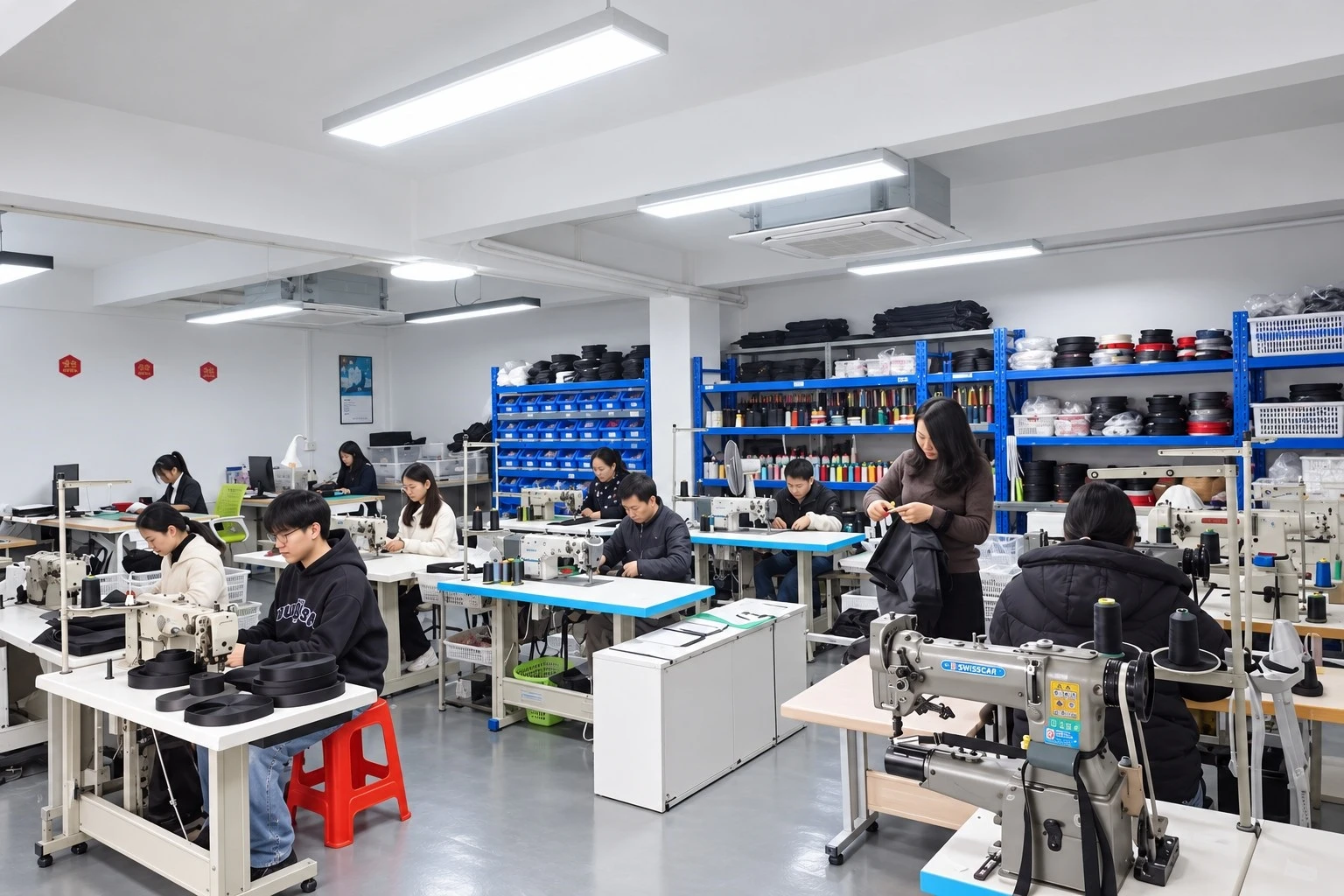
The sampling team translates design proposals into components and adjusts structure and details during sample making.
Materials and Components
Fabric texture, feel, and structure influence how a finished bag looks and performs in everyday use. Lining affects the feel and appearance of the interior, as well as how it works with the compartments. Materials need to be considered in the context of a particular design, not judged only by thickness or sheen. The same material can produce different results in different bag shapes or positions.
ARCTIC HUNTER incorporates custom branding into webbing and lining, extending the brand's identity from the outside of the bag to the interior. For a particular model's composition, construction, or performance, buyers should refer to its specifications and sample. A close-up of the fabric alone cannot establish a waterproof rating or abrasion-test result.
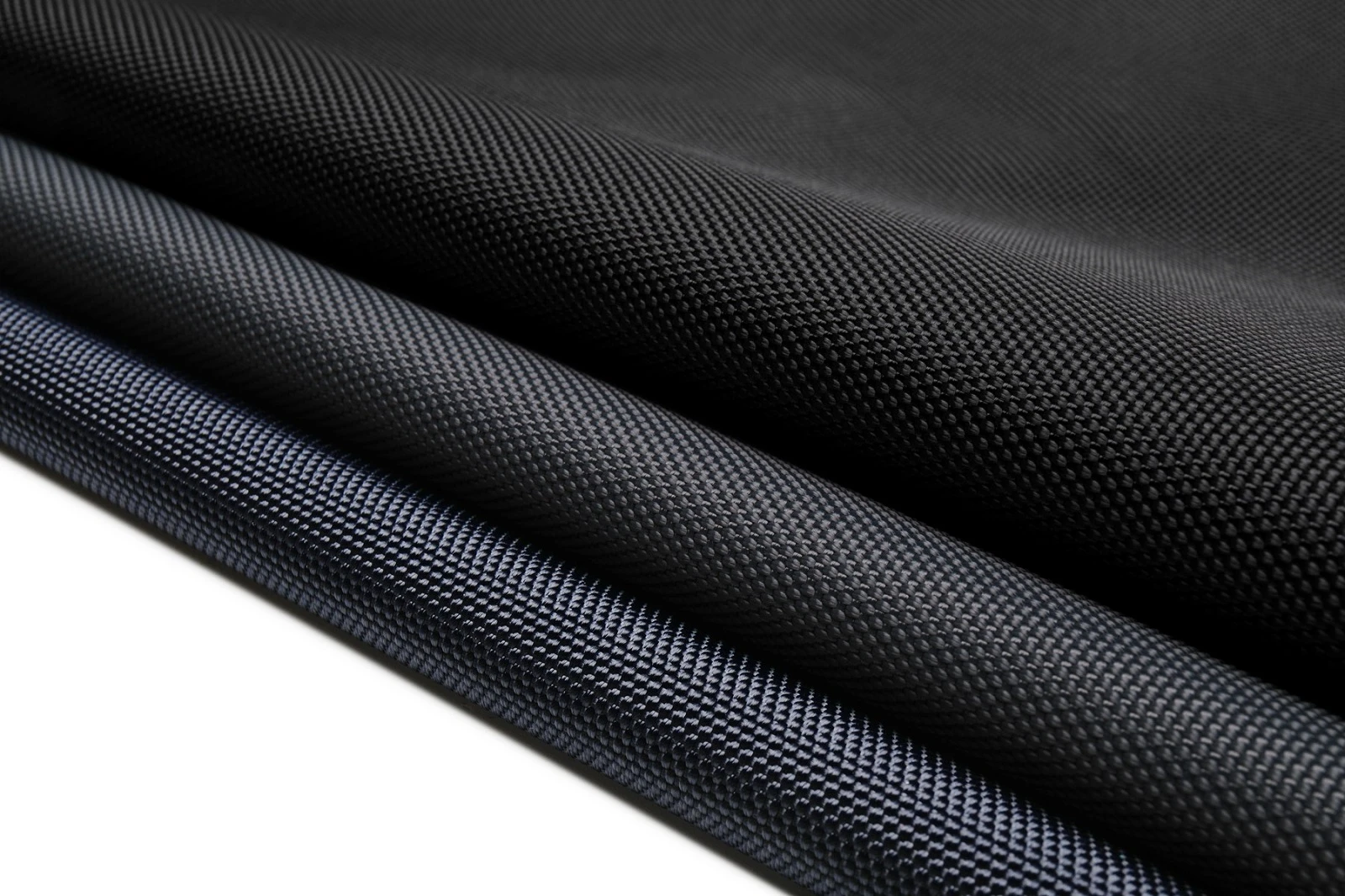
Close-up of the backpack fabric's surface structure and texture.
ARCTIC HUNTER develops collection-specific metal components and metal brand emblems using dedicated molds. The head designer selects, adjusts, and refines these details as part of product development; they are considered alongside the bag's design, not added as an afterthought. The shape, dimensions, finish, and placement of each component need to work within the collection. For wholesalers and distributors, these details provide concrete ways to recognize a collection's identity and explain product differences to customers.
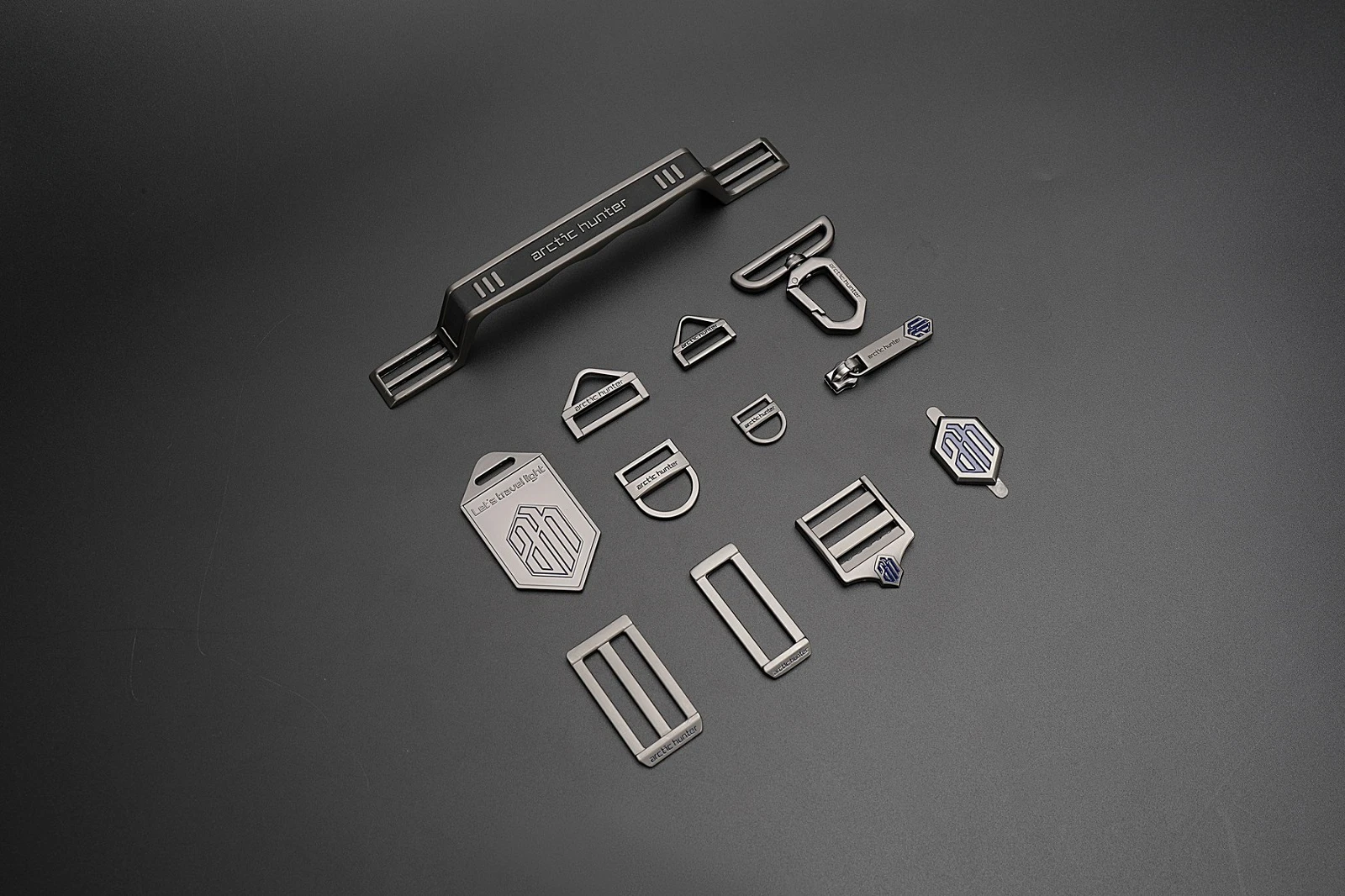
From zipper pulls and connecting hardware to brand emblems, individual components contribute to a collection's visual identity.
Zipper pulls and zippers are selected as matching components. A zipper pull provides a grip for opening and closing the bag; the zipper assembly determines how the opening operates. ARCTIC HUNTER considers both appearance and how they work on the bag. When assessing a sample, operate the zipper rather than relying on a photograph. Check how it moves around curves, whether there is enough room to grip the pull, and whether nearby material interferes with opening or closing. Images show the design; handling the sample helps reveal the experience of using it.
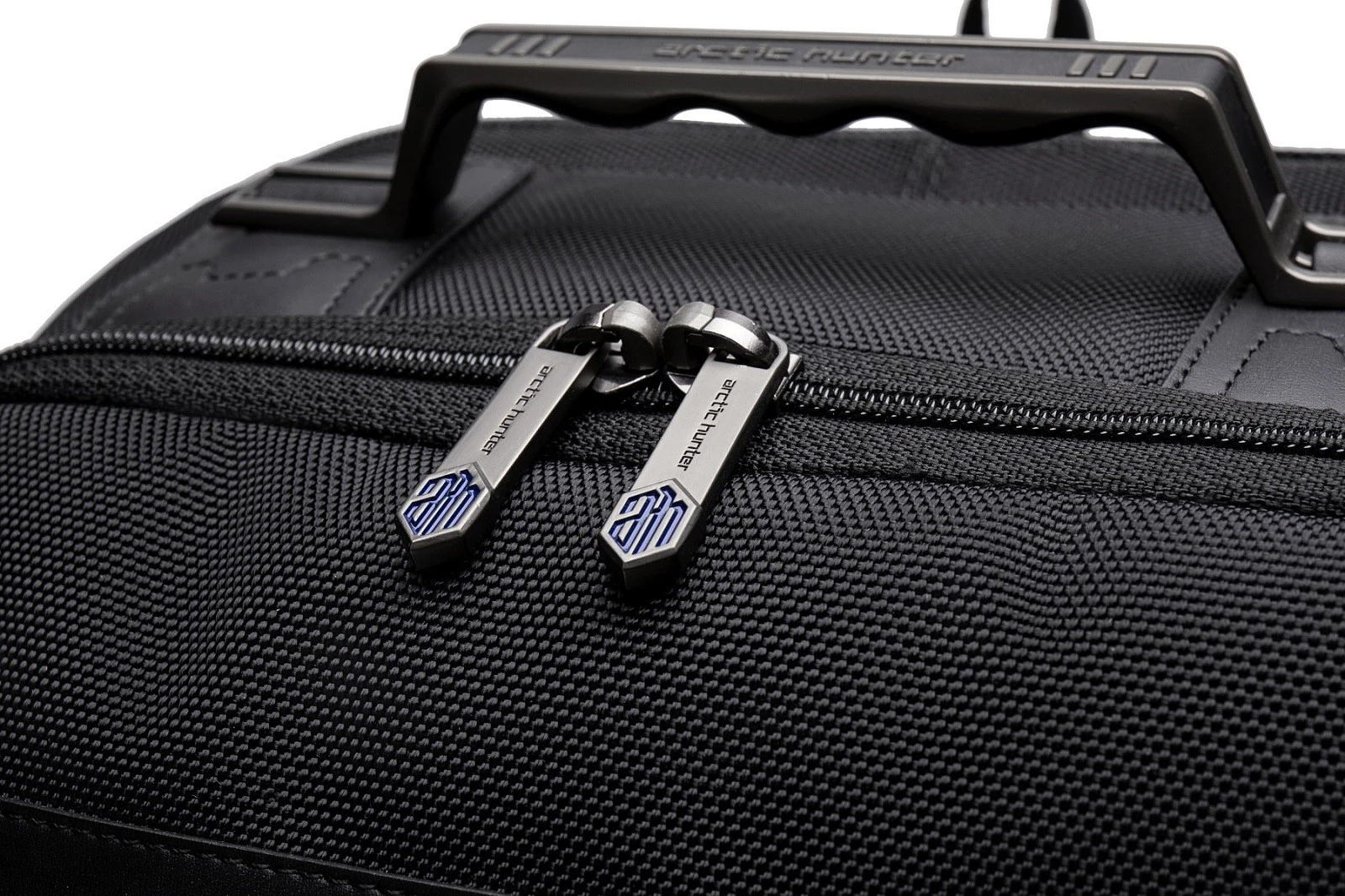
Branded zipper pulls, zippers, and their integration with the bag.
Branding is not limited to a badge on the front panel. Custom-branded webbing, handles with molded branding, and brand tags near side pockets are details the head designer selects and refines. They need to suit the overall appearance while also accounting for their position and everyday handling. These may not be the first features a customer notices, but they are encountered when adjusting a strap, lifting the bag, or examining it more closely. Small details help carry a consistent identity across the product.
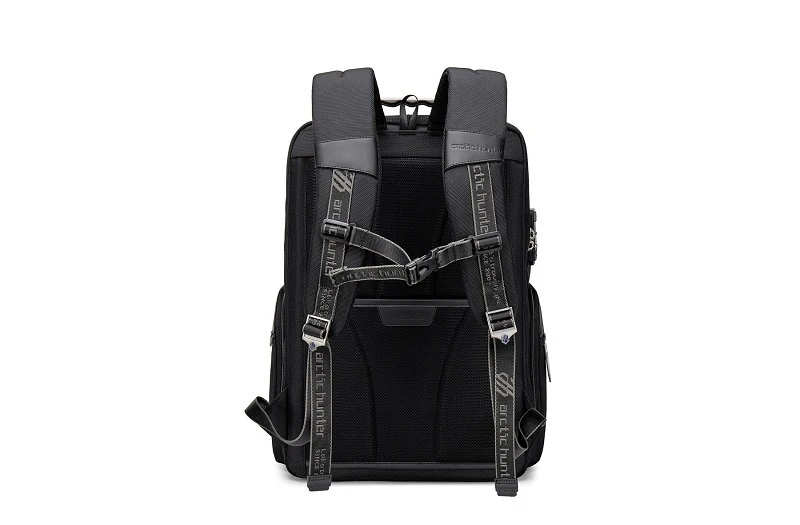
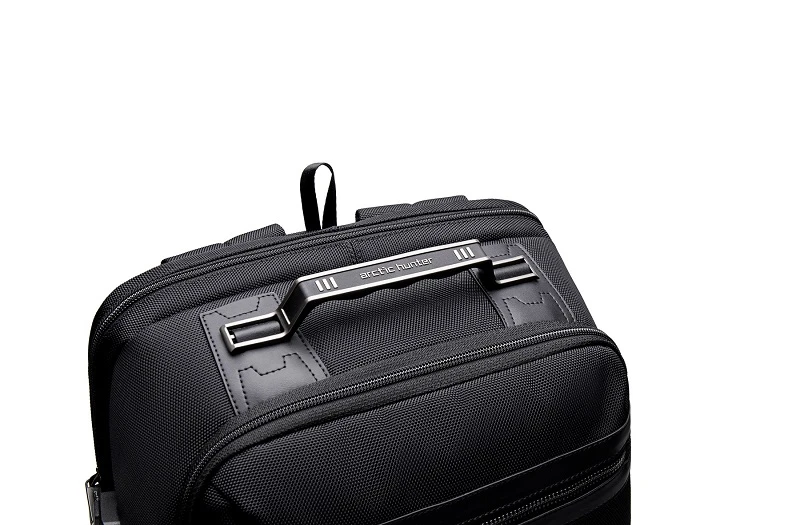
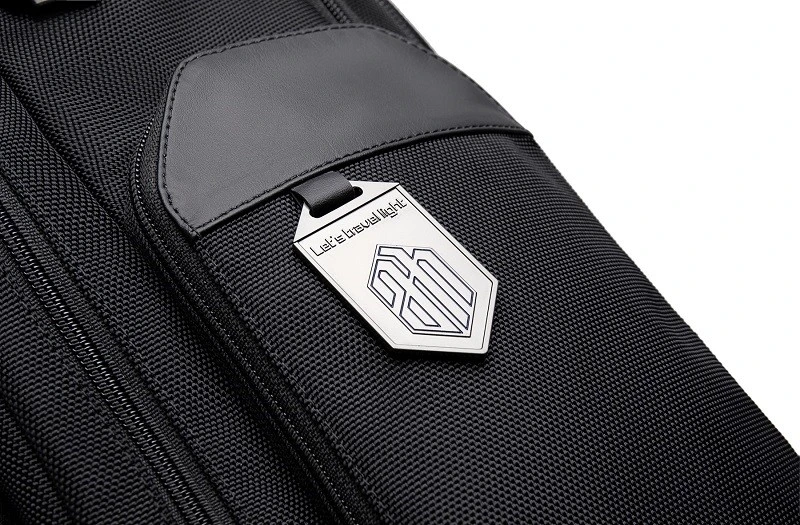
The back panel and branded webbing show how branding is integrated into the product; a branded handle and its connection to the bag; a close-up of the brand tag, attachment point, and surrounding materials.
Cutting and Assembly
Once the sample design is agreed, it needs to be translated into repeatable production arrangements. Fabric, lining, webbing, zippers, and hardware must be matched to the relevant design and requirements.
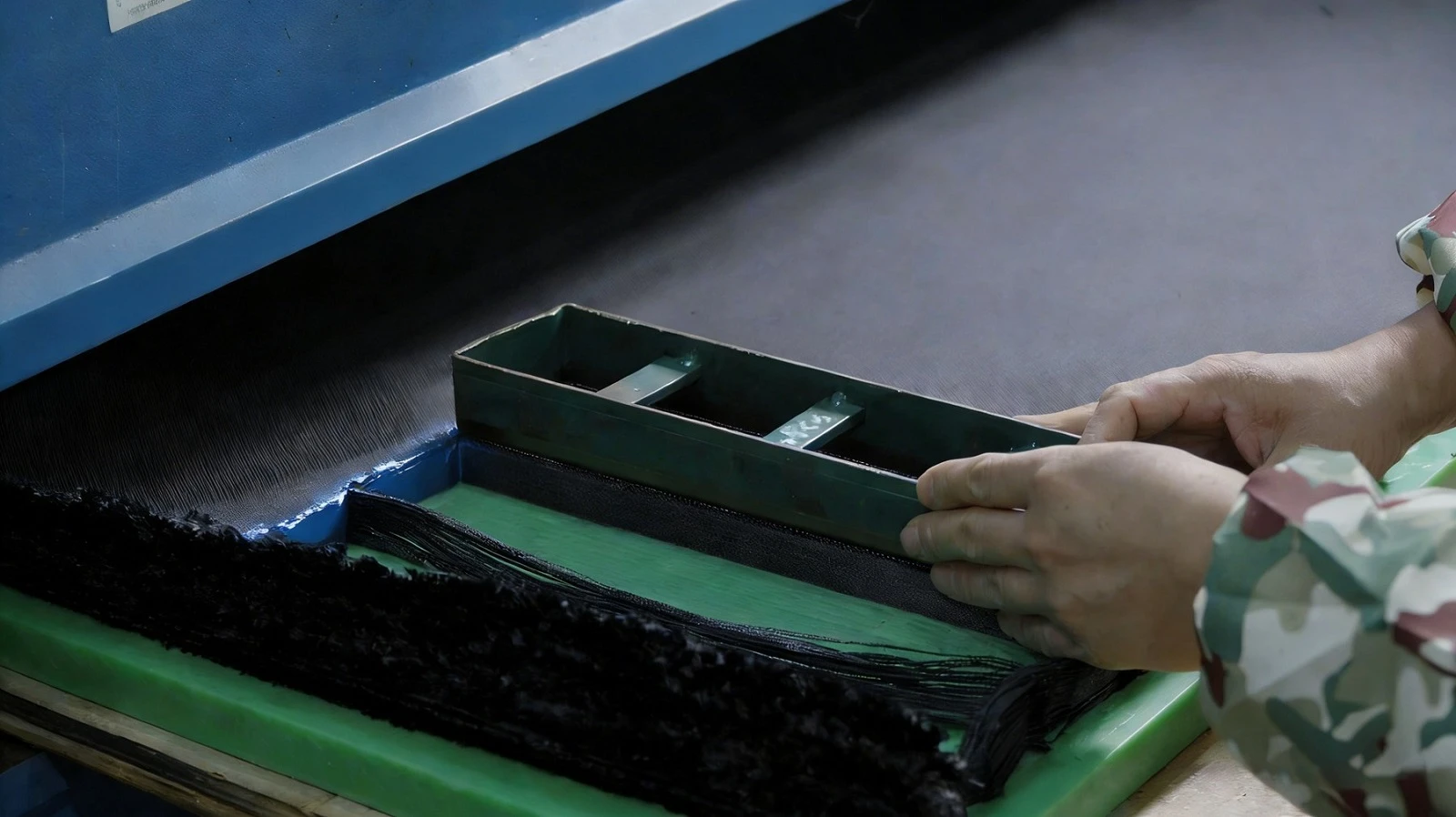
Cutting is more than dividing a piece of material. The shapes and dimensions of front panels, back panels, side panels, and smaller pieces affect how they fit during sewing. A deviation at this stage may only become apparent during assembly, which is why component consistency matters to the stages that follow.
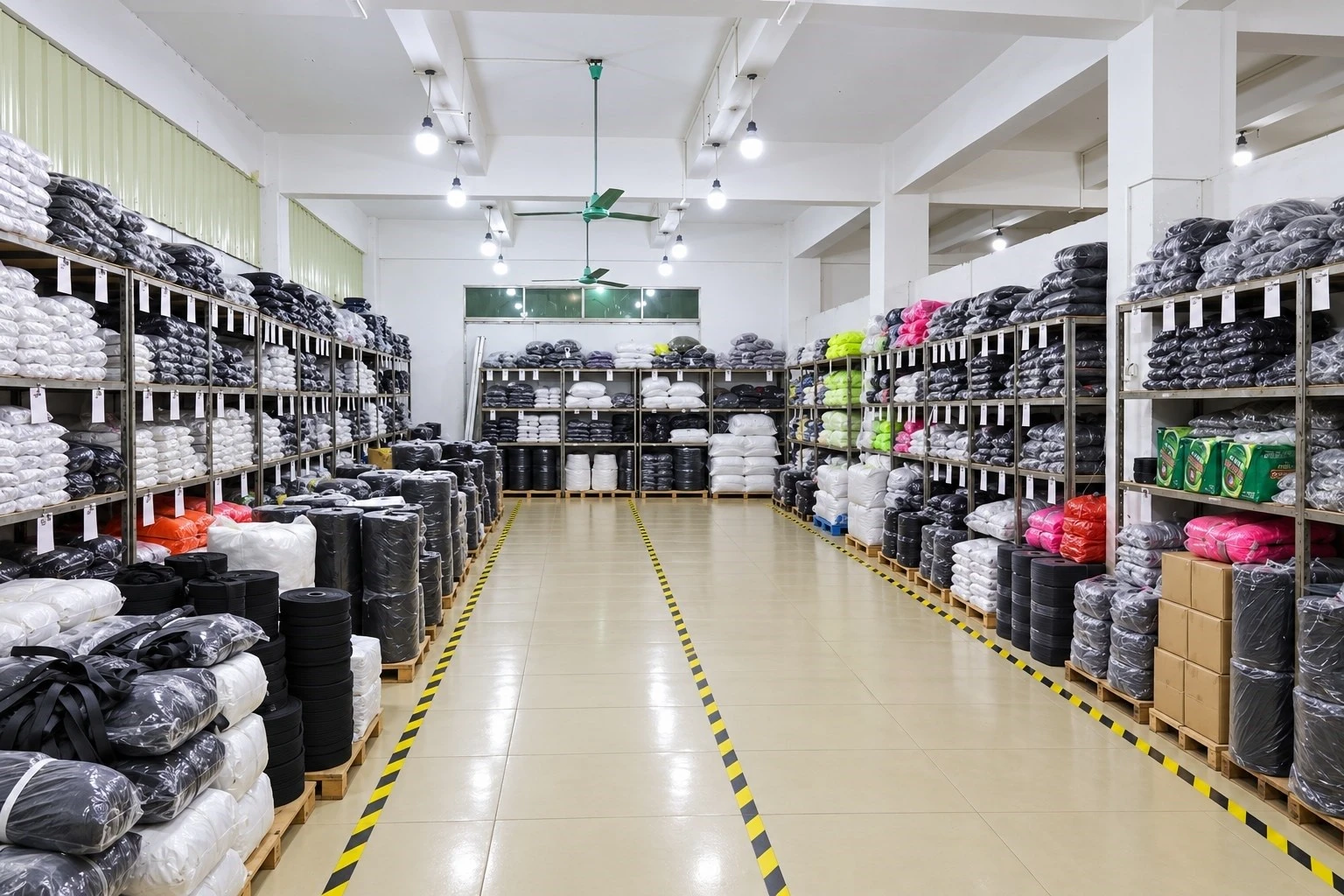
Materials and components stored in designated areas in preparation for production; a detail of material cutting and component shaping. The processing method varies with the material, component, and product design.
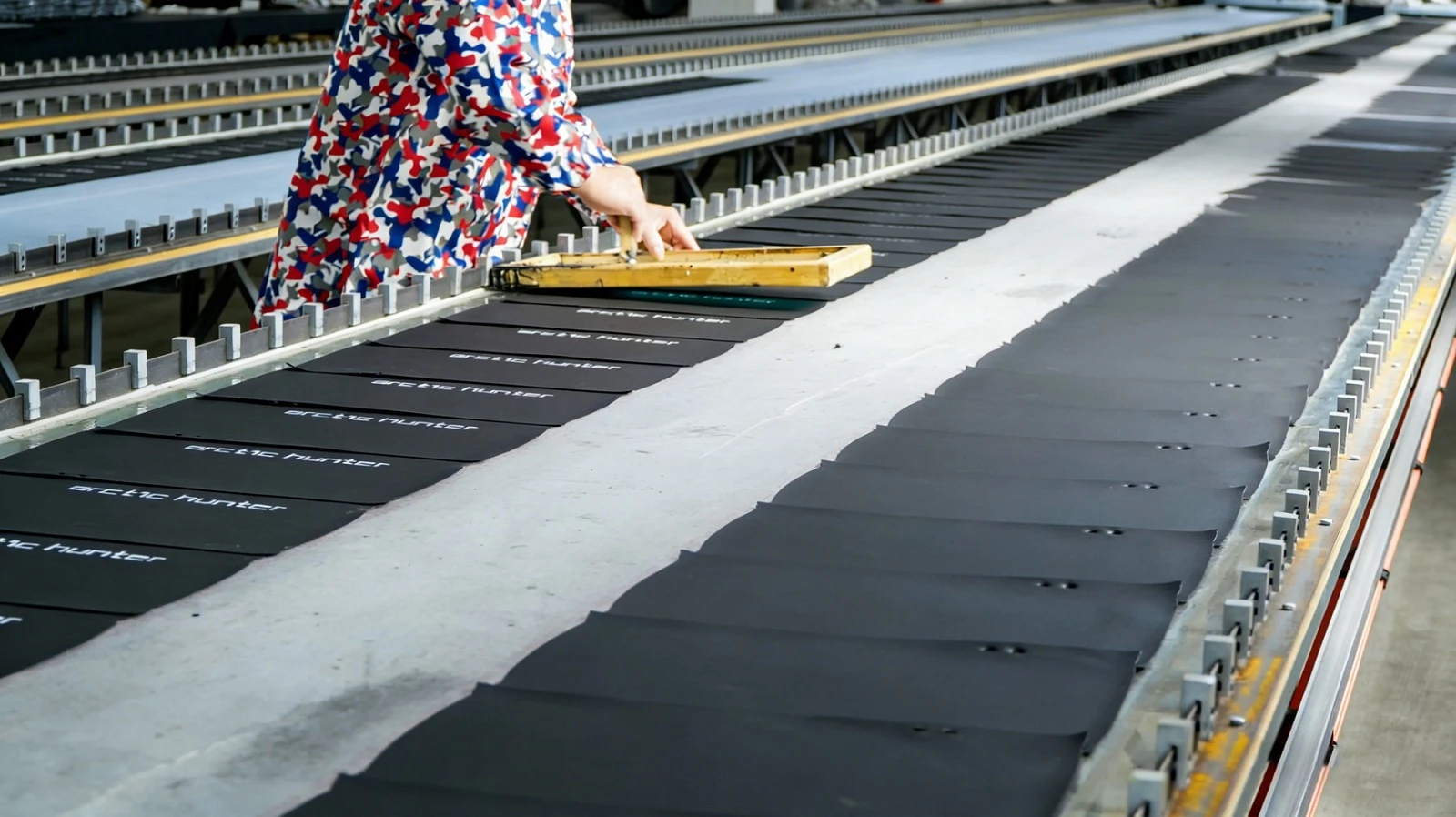
Some branding operations take place while the material is still in separate panels, before sewing. Position, orientation, and alignment with the component's layout all matter.
Brand marks being printed onto cut panels. Branding methods and production sequences can vary by model.
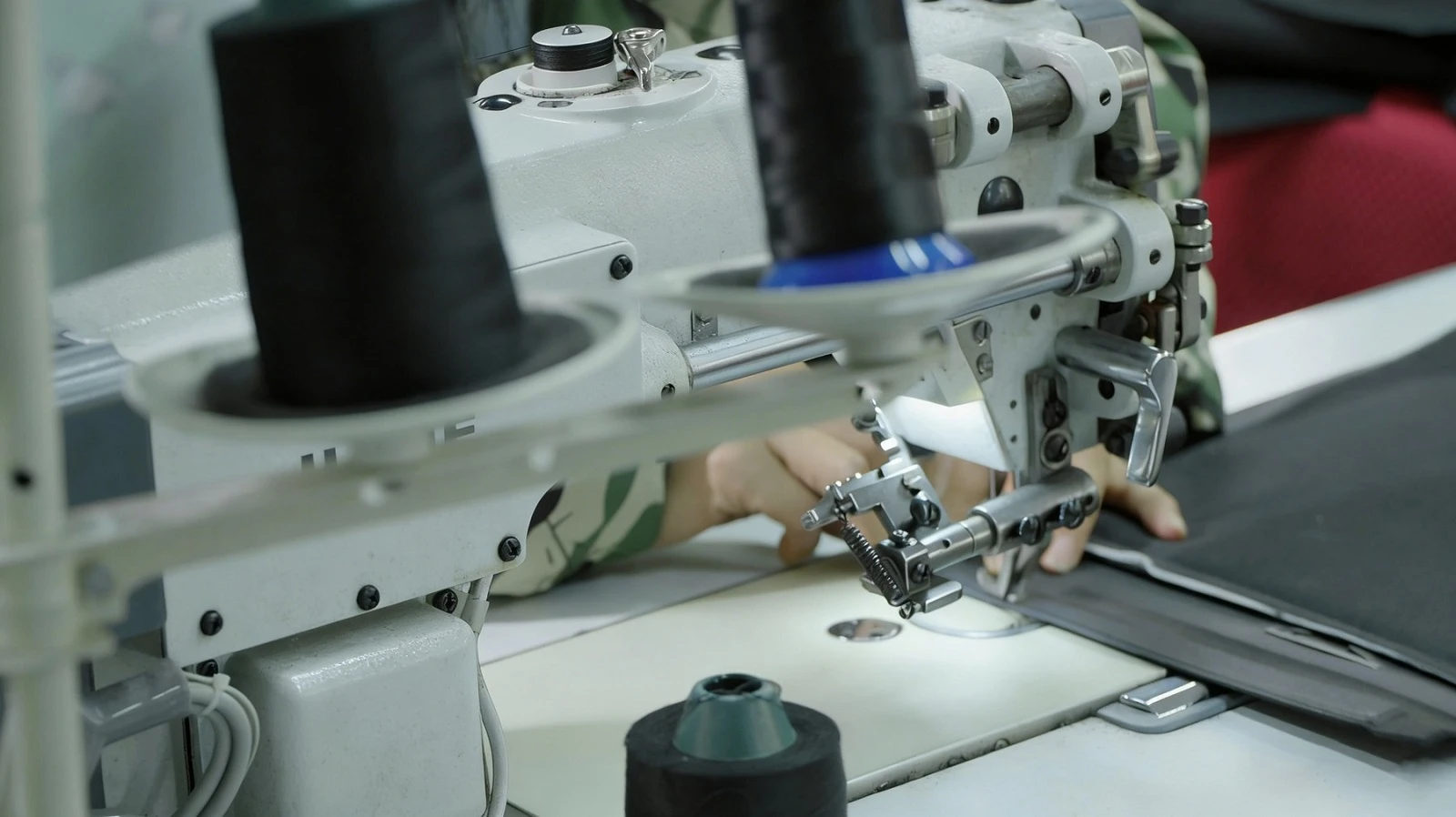
During sewing and assembly, separate components gradually become a complete bag. Joining the outer fabric and lining, installing zippers, and attaching shoulder straps and handles all influence the finished shape and function. When assessing workmanship, look beyond whether the stitching appears neat. Consider whether seams lie smoothly, both sides are balanced, load-bearing connections are appropriately constructed, and installed components operate without interfering with one another. Looking at these details together is more useful than judging a single attractive seam.
Close-up of material being sewn during component production.
Inspection and Packing
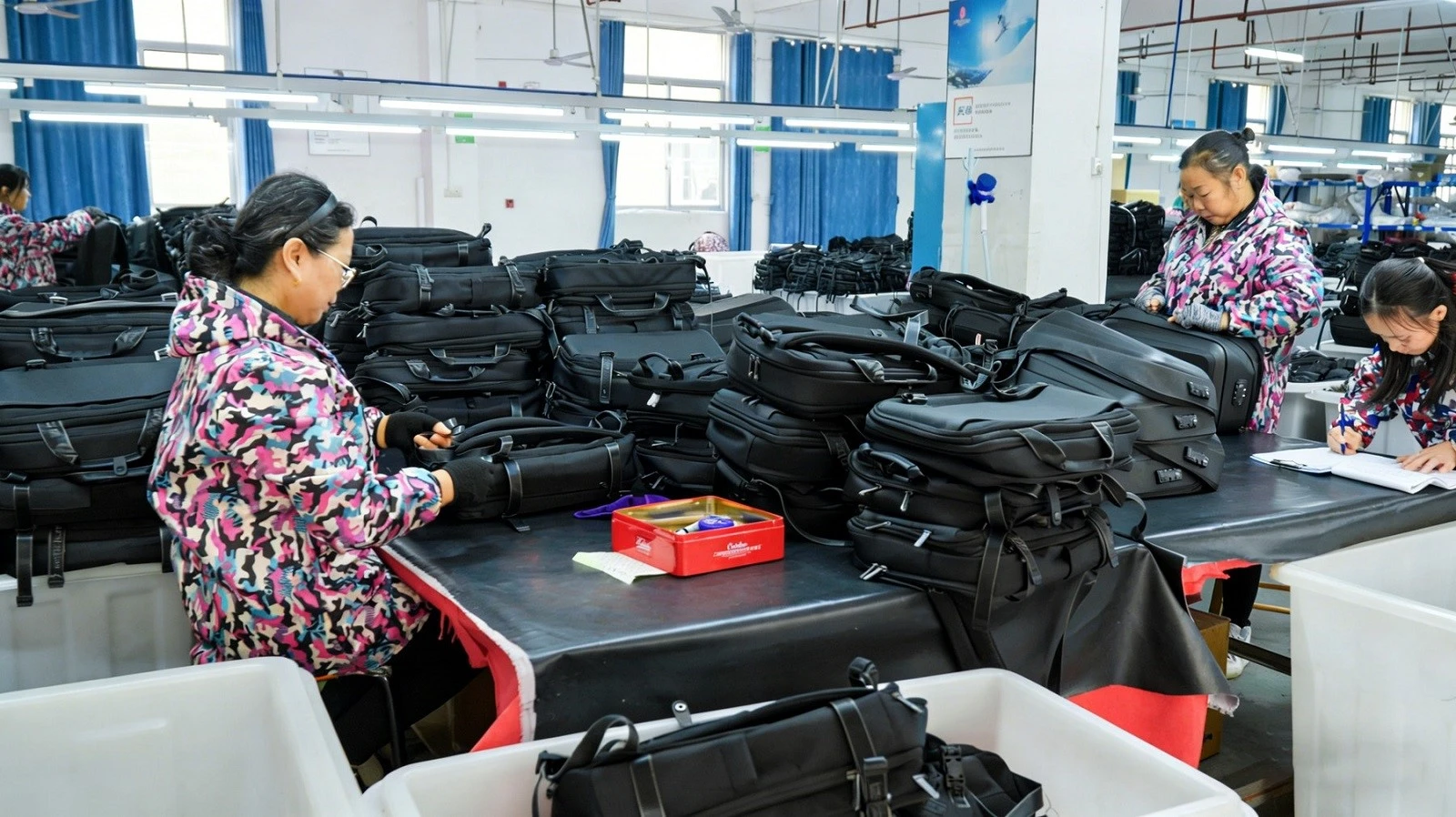
After assembly, the bag is reviewed as a finished product. Relevant checks include overall appearance, correct branding, visible seam issues, and the operation of zippers and adjustment components. For bulk purchasing, consistency between the approved sample and production goods should also be discussed and checked.
Manual inspection and specialized performance testing serve different purposes. Manual inspection focuses on appearance, assembly, and functional details. Requirements involving load capacity, abrasion resistance, or other specific performance characteristics call for the relevant model, test method, and supporting documentation to be identified. Discussing these separately helps buyers and suppliers define quality requirements more precisely.
Staff inspect finished bags and check the records.
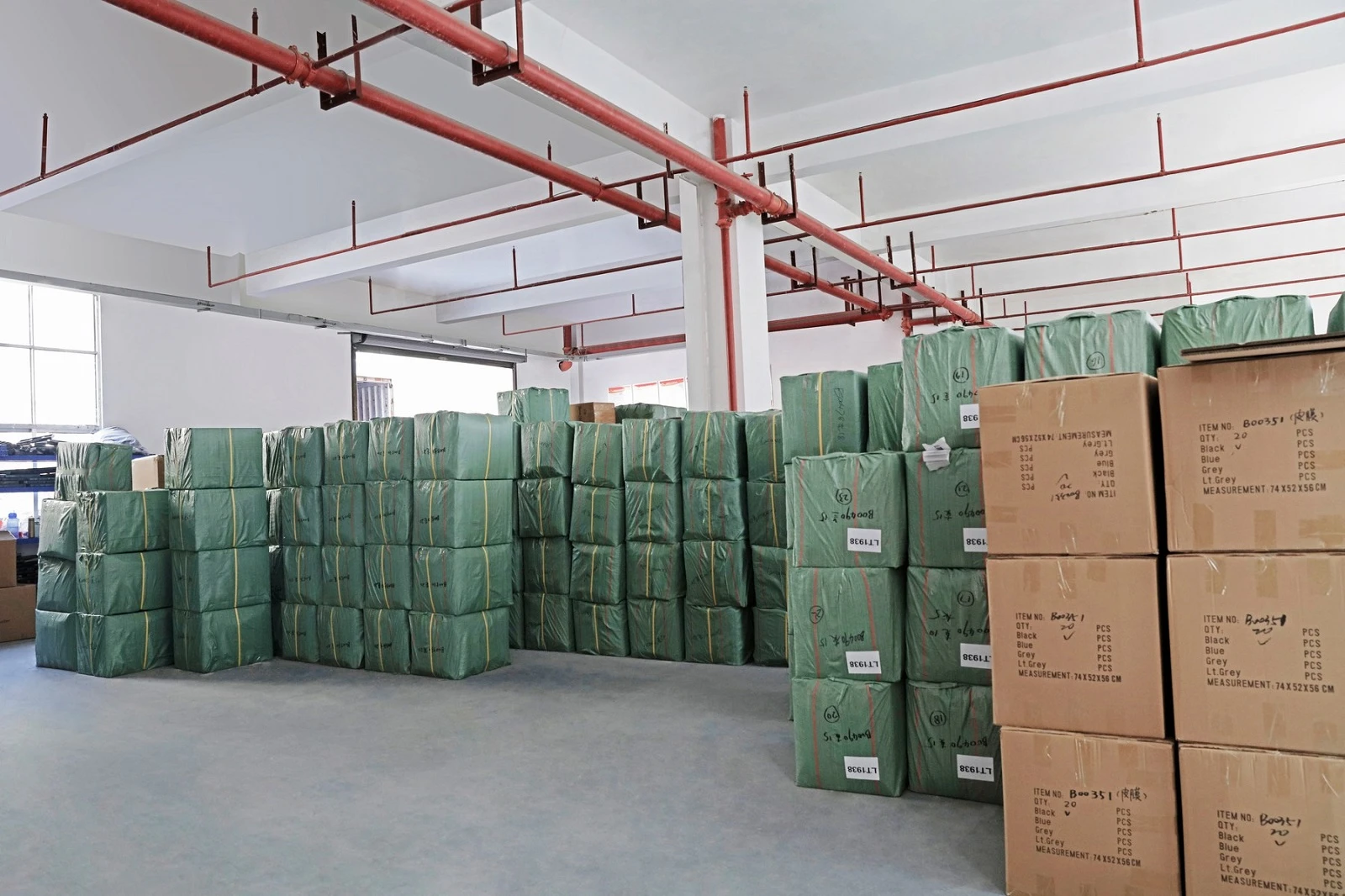
Packing is the final stage of production and the beginning of the product's journey through distribution. Individual packaging, outer cartons, and storage arrangements need to align with the actual order requirements. For distributors and retail channels, agreeing on packaging, product identification, and shipping arrangements in advance can help reduce misunderstandings during receiving and preparation for sale.
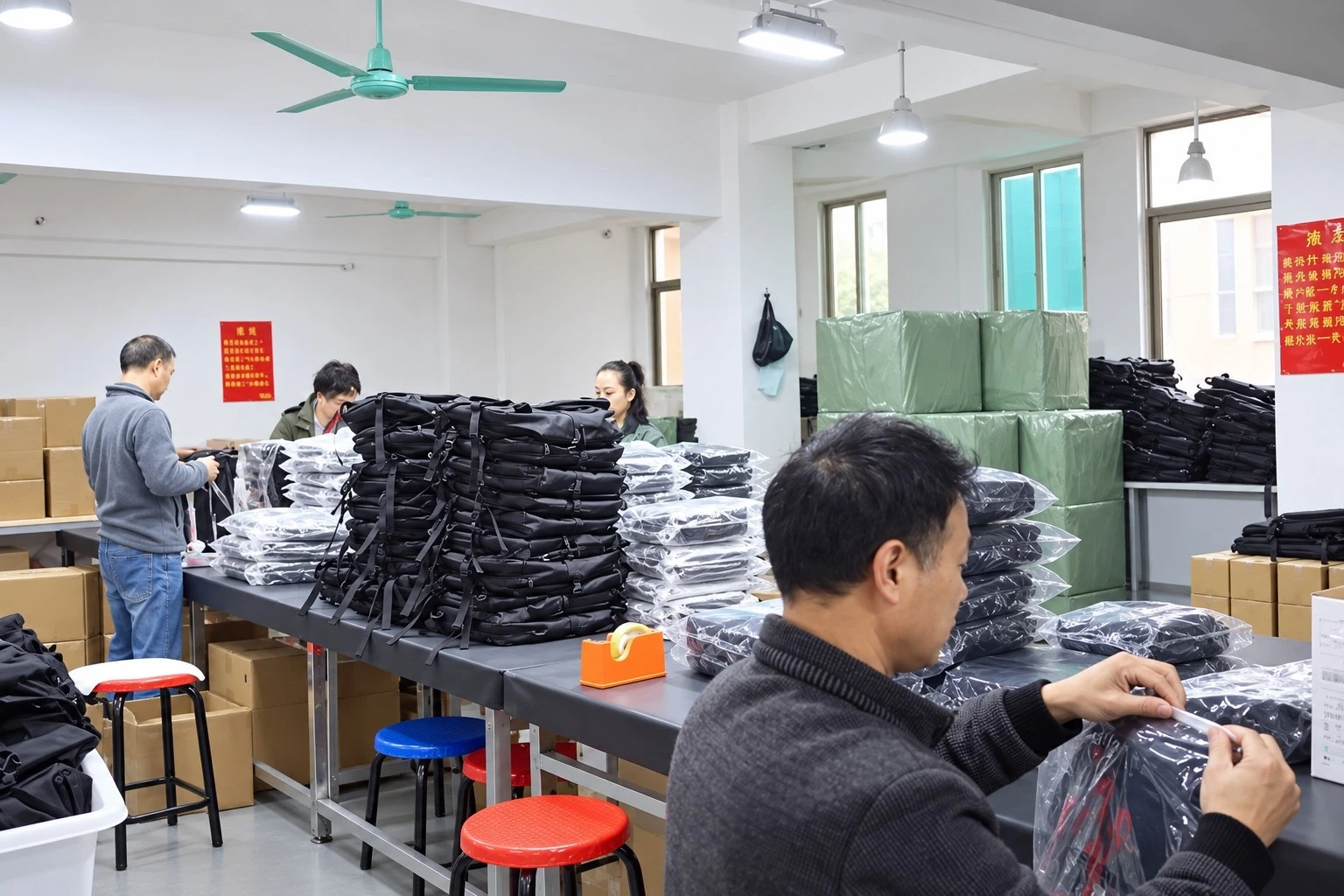
Bags being individually packed; packed products enter the subsequent storage and distribution stages.
What Buyers Can Check Beyond the Sales Description
Understanding how backpacks are made helps buyers ask more useful questions and know what to examine.
For design and development, do not rely only on a finished-product image. Discuss the refinement process, examine samples, and review the intended use.
For fabric and lining, do not rely only on color, sheen, or a texture photograph. Compare model specifications with the physical sample and review relevant test documentation where performance requirements apply.
For zippers and hardware, do not rely only on decoration and brand marks. Operate the components and check compatibility, installation, and consistency within the collection.
For sewing and assembly, do not rely only on a photograph of one seam. Examine the complete bag, its connection points, and its behavior during use.
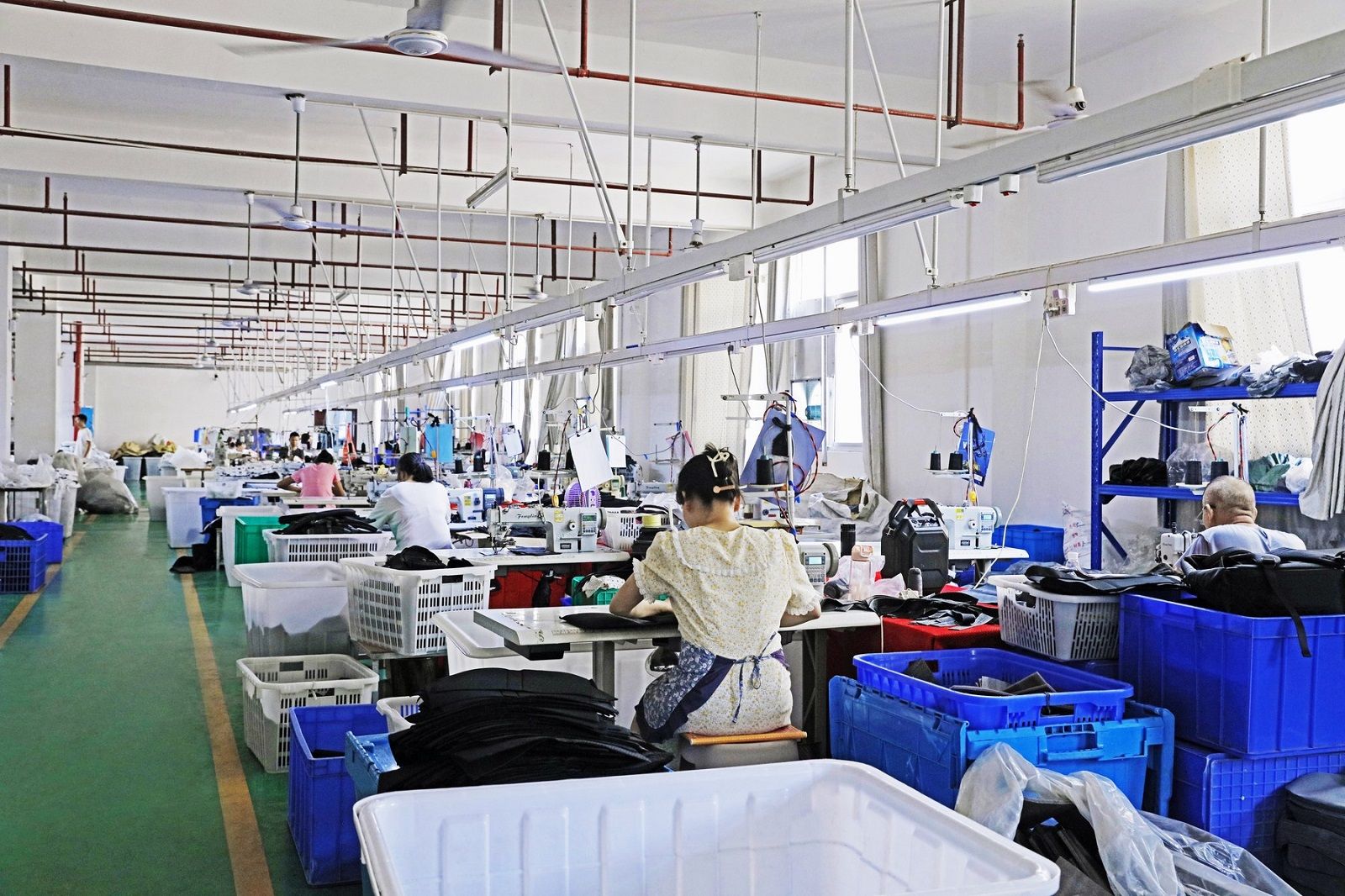
For quality and delivery, do not rely only on workshop size or warehouseimages. Agree on inspection requirements, sample-to-production consistency, packaging, and order conditions.
From the head designer's component choices to at least ten rounds of development refinement, followed by production and preparation for delivery, backpack quality comes from a series of specific decisions. It cannot be reduced to one photograph or a single claim.
If you are selecting backpacks for wholesale, brand distribution, or retail, contact ARCTIC HUNTER with your target country, sales channel, product categories, and estimated order quantity. We can discuss product configurations and cooperation requirements around specific models and samples. For brand distribution opportunities, explore our distributor program.