

Introduction
The global carry goods industry has shifted toward high functional specialization, driven by distinct modern commuting and travel requirements. Commercial buyers, inventory planners, and sourcing professionals must navigate clear structural boundaries when choosing between business backpacks and travel backpacks. While both categories emphasize gear protection and ergonomic carry, their physical architecture, storage capacities, and target applications differ significantly. Understanding these engineering differences and market positions allows distributors to optimize product portfolios, reduce return rates, and capture growing consumer demand effectively.
What Defines a Business Backpack and a Travel Backpack?
Understanding the primary design intent behind each category establishes the baseline for evaluation. The following two classifications outline the core structural characteristics of business and travel models.
Business Backpacks
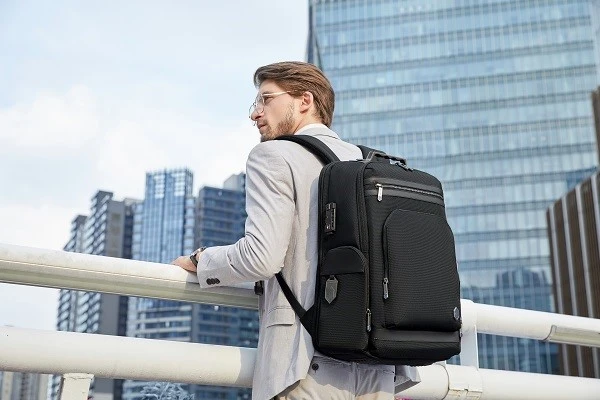
Business backpacks emphasize a clean exterior profile, rigid structural integrity, and formal aesthetic restraint suited for corporate environments. Designed primarily for daily commuting and executive meetings, they prioritize dedicated device protection, interior document organization, and streamlined profiles that minimize unnecessary bulk. Their construction focuses on protecting mobile workstations while maintaining a polished professional appearance.
Travel Backpacks
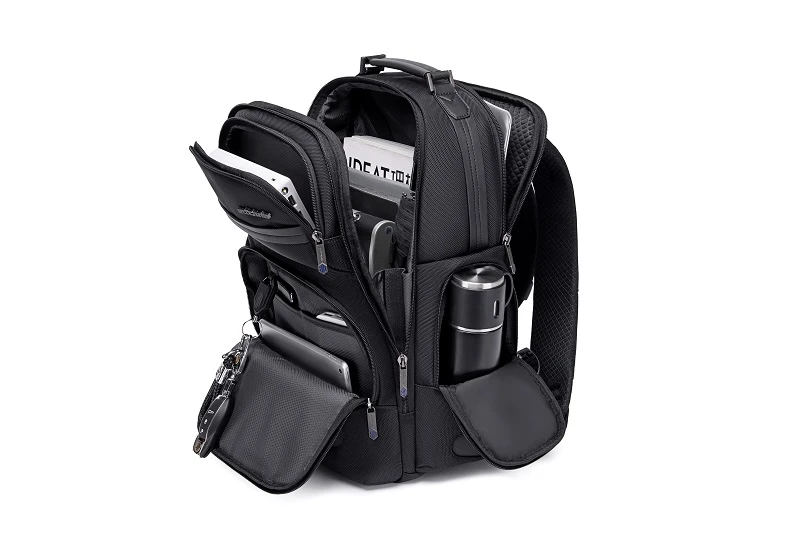
Travel backpacks prioritize internal volume, adaptable packing layouts, and high mobility to support short-term travel as an alternative to traditional rolling luggage. Many designs in this category offer expandable volume gussets, wide-opening main compartments, and dedicated organization zones for clothing or personal items. Advanced or travel-focused models may also integrate specialized features such as luggage trolley straps or separate storage sections to facilitate multi-day trips.
What Are the Key Differences Between Business Backpacks and Travel Backpacks?
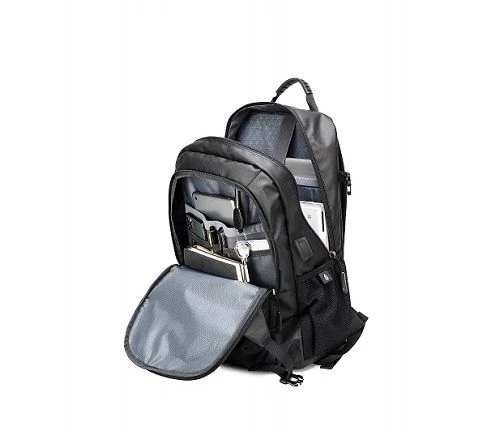
Comparing core parameters directly helps buyers evaluate capacity, structural complexity, and target application across standard market offerings. The comparison matrix below outlines the typical technical specifications for both categories.
|
Evaluation Parameter |
Business Backpacks |
Travel Backpacks |
|
Storage Capacity |
Typically compact (15L – 22L) for daily essentials |
Higher volume (28L – 45L), often expandable |
|
Opening Mechanism |
Standard top-loading or perimeter half-zip access |
Wide-opening or 180° flat clamshell access on select models |
|
Structural Silhouette |
Generally structured, non-collapsible, slim profile |
Flexible volume shell, often paired with compression straps |
|
Laptop Compartment |
Padded sleeve optimized for standard 14"-15.6" tech |
Multi-device sleeves, often sized up to 17.3" laptops |
|
Harness Architecture |
Slim S-curved shoulder straps for standard daily loads |
Enhanced padded straps, optional sternum support or load lifters |
|
Internal Organization |
Multi-tier document filing, card slots, pen loops |
Large main packing cavity, optional isolated gear pockets |
|
Luggage Integration |
Integrated back strap for rolling luggage handles |
Trolley strap interface, optional rear security pockets |
|
Security Features |
Concealed zippers, minimal exterior pockets |
Various options, ranging from lockable zippers to TSA locks |
|
Weather Resistance |
Standard water-repellent woven synthetic fabrics |
Durable water-repellent shells, weather-resistant zipper covers |
|
Primary Use Case |
Daily office commute, corporate client meetings |
Airline carry-on, 3–5 day multi-city travel |
Which Backpack Is Better for Different Target Markets?
Different retail channels and consumer demographics require specific functional features and structural capacities. The following market breakdowns highlight which category aligns best with common consumer profiles.
Corporate Office Commuters
Daily corporate commuters demand minimal bulk, executive aesthetics, and precise tech protection. Business backpacks excel in this segment by keeping laptops, tablets, and paper documents organized without losing structural shape. Their slim profile easily navigates crowded public transit, elevators, and professional office spaces.
Frequent Airline Travelers
Frequent flyers and business travelers require efficient packing and seamless airport navigation. Travel backpacks are well-suited for this segment, offering overhead bin compliance alongside flexible packing layouts. Models equipped with luggage trolley straps and accessible laptop sections help streamline transit and security procedures.
Digital Nomads
Remote workers and tech-heavy nomads need a balance of structured tech organization and multi-day carrying capacity. High-capacity business models or hybrid compact travel backpacks fit this demographic, offering space for devices, power accessories, and personal items while maintaining mobility across remote work environments.
University Students
Higher-education students prioritize lightweight durability, quick-access storage, and versatility for carrying both tech gear and daily supplies. While business backpacks provide organized laptop protection, more flexible travel daypacks or casual packs offer extra room for textbooks, personal gear, and daily essentials.
What Should Buyers Consider When Selecting Business and Travel Backpacks?
Selecting the ideal inventory balance requires systematically evaluating product specs against market expectations. Sourcing managers should consider the following key selection criteria:
- Evaluate Target Customer Commute Habits: Assess whether your primary buyer base consists of daily city transit users needing compact profiles or regional travelers requiring multi-day storage volume.
- Verify Laptop Compartment Clearance Standards: Confirm that interior padded sleeves properly fit target device dimensions, specifically verifying clearance for 14-inch, 15.6-inch, and 17.3-inch laptop form factors.
- Inspect Fabric Hydrophobic Performance: Ensure exterior shell materials feature high-density weaves and water-repellent surface finishes to protect high-value electronics from unexpected weather.
- Review Load-Bearing Ergonomic Systems: Check for 3D breathable mesh back panels, comfortable shoulder padding, and luggage strap integration to guarantee long-term carrying comfort.
- Balance Feature Integration with Target Retail Pricing: Match functional additions-such as security mechanisms, expandable compartments, and internal organizers-with your target price point to optimize margin performance.
Conclusion
Determining whether business backpacks or travel backpacks are better for your market comes down to balancing structural design, carrying capacity, and functional features against your end users' daily mobility demands. Stocking a strategically balanced portfolio of streamlined business models and versatile travel packs ensures comprehensive coverage across corporate, academic, and travel retail channels. Contact us today to explore the complete Arctic Hunter business and casual backpack collections and select high-performance carry solutions tailored to your commercial market requirements.